
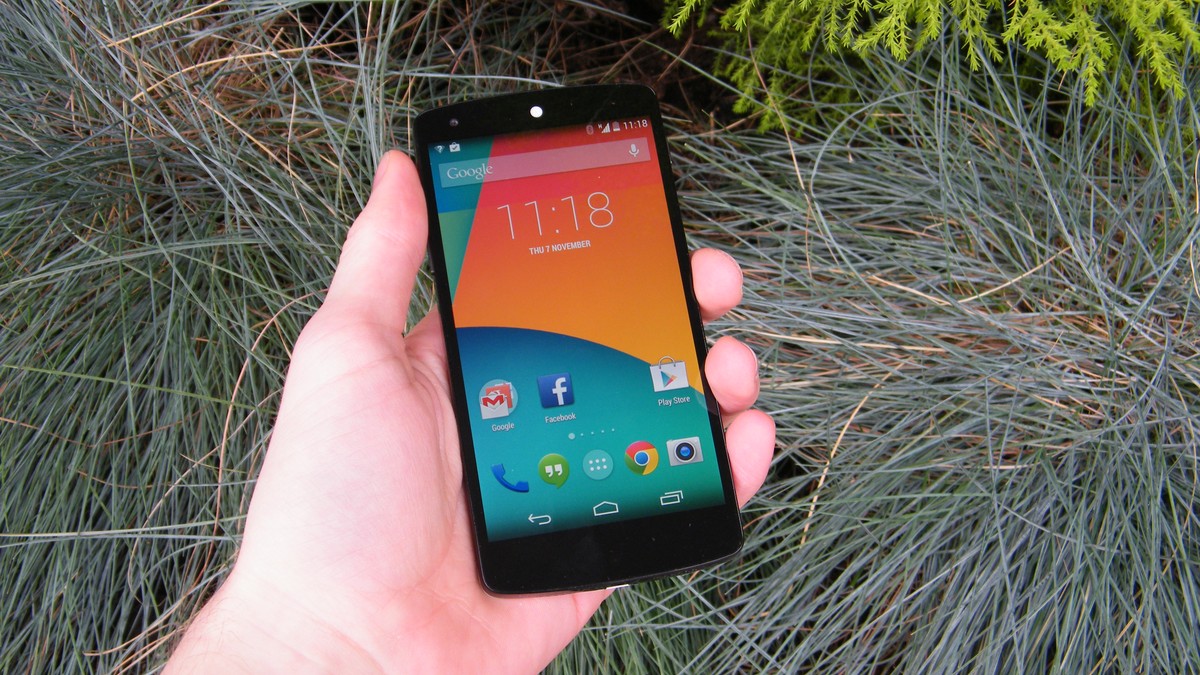
The problem with consumer electronics reviews on monster sites like CNET is that writers never have to pay for their own consumer electronics.
Manufacturers provide them for free. Writers test them for a week or two, and then crap out their articles. It’s a perfectly symbiotic relationship. One party needs to evangelize its flashy new widget. The other needs fresh content it can monetize with ads.
A positive review is cash in the bank for both parties. And therein lies the nub of my complaint. The likelihood of a positive review dramatically increases when the reviewer doesn’t start to feel like his or her money was wasted.
In other words, it’s hard to be genuinely critical about a product if you’ve invested nothing in it.
I, on the other hand, bought an unlocked 32GB Google Nexus 5 and sold my Nexus 4 on Kijiji to offset the purchase price. (This is how intelligent people acquire new smartphones. Not-so-intelligent people lock themselves into multiyear carrier contracts so they can pay more on layaway. But I digress.)
I am fully invested in my new Google Nexus 5. Which means I’m not going to indulge in breathy design fetishism. (ars technica: “The back is matte, but all the ceramic accent pieces—the buttons and rear logos—are glossy. This is so much more grown up than the gaudy ‘faux’ nonsense that gets slathered onto other Android phones. It’s like the CR-48 of smartphones.” Whatever that means.)
No, this is about the experience of spending hard-earned money on a product that doesn’t live up to its advance billing. This is about it dawning on you that you might have gotten carried away in the surge of a well-executed launch campaign. This is about feeling a little like a sucker.
The Google Nexus 5 is a fine phone for the money. $349 for the 16GB model and $399 for 32GB: I defy you to source a state-of-the-art mobile device for less. If you’re coming to it from a smartphone that’s more than a couple generations behind, the Nexus 5 will blow your mind.
The display is jaw-dropping: crisp, vibrant, so exquisitely detailed that it’s like a little three-dimensional world in there. It’s also a true speed demon. I use it to surf on Bell/Virgin Mobile’s LTE network and the response rates are genuinely impressive. Gaming (so far, I’ve tested only Need for Speed: Most Wanted) is a pleasure, though I am admittedly not much of a gamer.
Google Now is also improved. It was always useful and accurate, but with Android 4.4 there’s something more intuitive about it: you can have actual conversations with your phone. Yesterday, for instance, I asked Google Now if it would snow tomorrow. “No,” replied my phone, “tomorrow’s forecast is sunny and six degrees.” That’s pretty damn cool. Suck it, iPhonies.
Design-wise, the Nexus 5 is as wide as the N4 it replaced, but for some reason fits better in my hand. Not sure why that is, nor do I intend to think much about it. It just works. Otherwise, it’s like every other smartphone on the market, save the ridiculously blinged-out iPhone 5S: a black slab, more than overtly reminiscent of the monolith in 2001: A Space Odyssey.
I’m not sure what to say about KitKat. It’s really just a nicely-branded iterative upgrade from Android 4.3. Except certain vital features appear to be broken.
Google Now is supposed to be “always listening” but for some reason it stops paying attention after more than ten or twelve hours on standby.
It no longer syncs with my office’s Exchange 2003 server – or, if it does, I simply haven’t found a way to make it work. I’ve been at it for more than three days. I shouldn’t have to spend that much time on anything that’s supposed to improve my productivity. I’ve tested every third-party app available. No dice. Even OWA-supporting and highly suspect mail clients like Emoze worked but turned off my Nexus 5’s radio. I could call out but not connect. So now I have to learn to live without work email on my phone. Or I have to convince our IT guy, whom we affectionately call Tech Nazi, to upgrade Exchange. Fat chance that’ll ever happen.
And the speaker. The speaker! It’s on the bottom edge now, and not out back like the Nexus 4. Except this is one cheap piece-of-shit component. The sound it emits is so below par that Google should recall the entire device. I can’t hear my phone ring when it’s in my pocket. When I use my left hand to retrieve it, my thumb naturally sits atop the speaker and completely blocks all sound. Not that this is a deal-breaker, but I have occasionally checked my phone to see if I’d accidentally placed it on silent.
Stuff like that makes me wonder what Google was thinking when it approved the Nexus 5 for production. More to the point, it makes me wonder what I was thinking when I replaced my very-competent Nexus 4 less than a year after I’d bought it.
The Nexus 4 felt revolutionary because it was revolutionary: an inexpensive hand-held computing system with top-tier specs; a vast improvement over what came before it. Underground Woman was so impressed by my experience that she bought one for herself. So did two other people I know.
But these days, technological changes are incremental, often not for the better. Yet we convince ourselves that we can’t live without the latest or greatest. When in fact we can, very easily.
Nothing explains or forgives the long lines at iPhone stores. There’s no reason to hang over a Buy Now button, anxiously awaiting the moment when a much-leaked and highly rumoured product slips into the market and is gone in less than an hour. (Hey, young people: if you can stand in line for two days to buy a phone you don’t need with money you don’t have, don’t come bitching to me later about how hard it is to find work.)
Manufacturers love us for our dog-like loyalty. But, really, we’re just their bitches. Marks. Suckers.
Do you need a Nexus 5? Not if you already own a Nexus 4. Do you want one? Of course you do. Should you buy it anyway?
In a word: no. From the guy who paid to review his phone. So you don’t have to.